Having visited the east and west of Turkey a couple of times, I noticed that you find the economic boom mainly in the west. Travelling through the eastern regions, you can see the hardship of their lives on some people‘s faces.
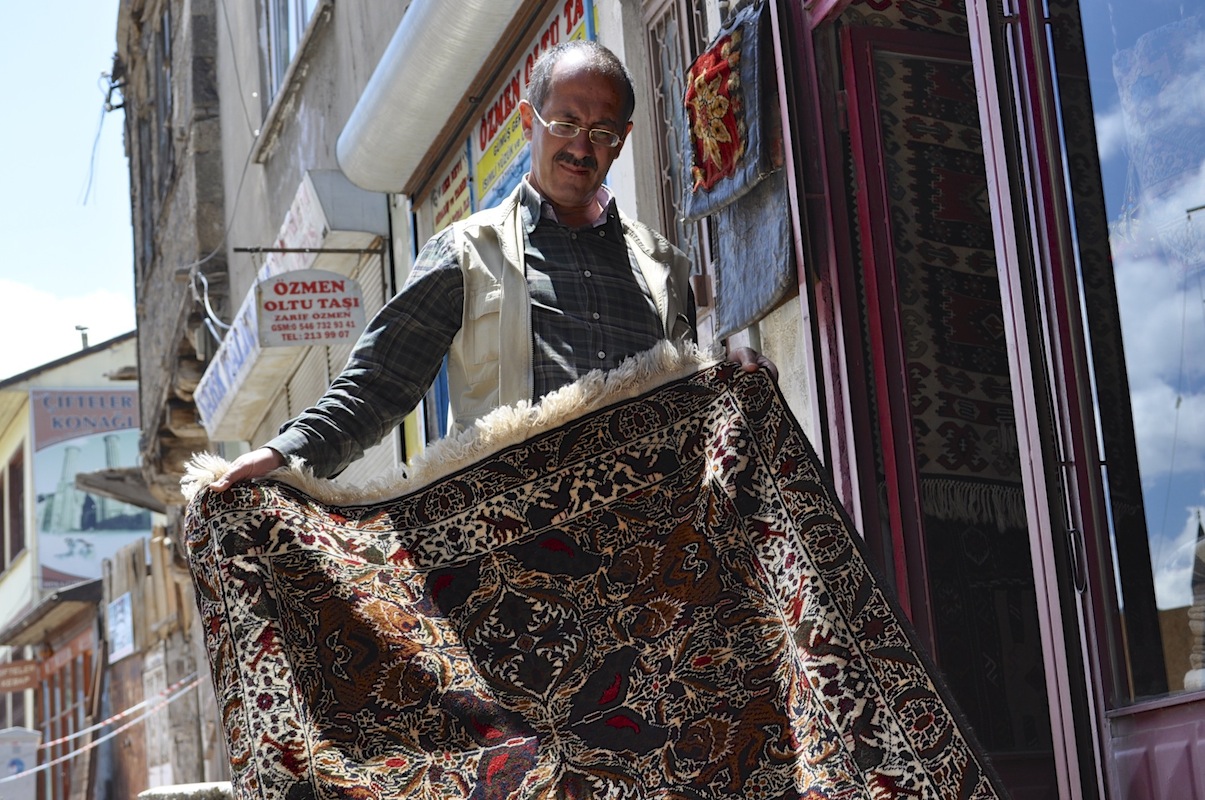
When I visited Selcuk in Western Turkey two years ago, I had a long talk with a carpet dealer. Himself originally from the east, he told me of the importance of buying handmade products, to support the people in those poorer regions. And, of cause, carpets are among the main handcrafted products produced there.
The classic Turkish carped is either knotted or flat woven. The oldest records of woven carpets – or kilims – were found in Çatalhöyük near Konya, dating back to 7000 B.C.. The knotted rug is believed to be brought to the region with the migration of Turkic peoples from Central Asia between the 6th and 11th century.
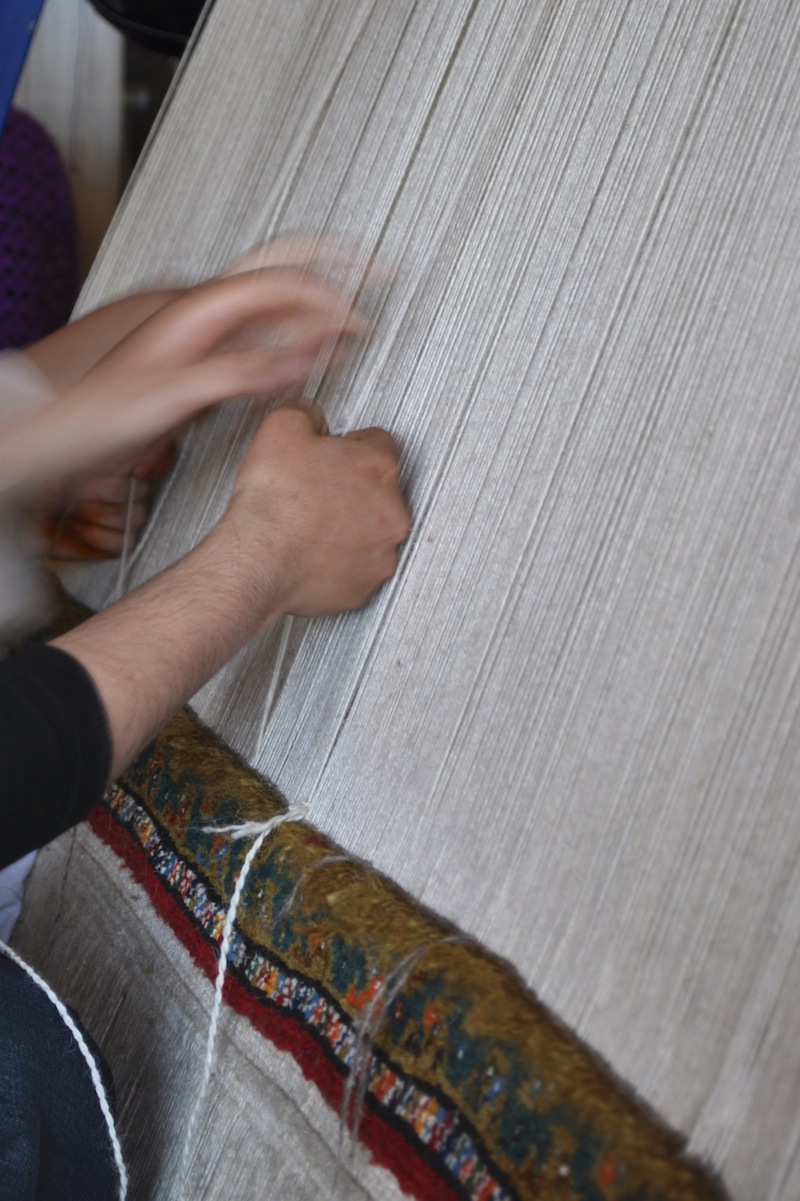
After the crusades, the first carpets were imported to Europe in the 11th century. Through the extended trade with the Middle East, carpets became more and more fashionable and even European carpets were produced.
Today, hand crafted carpets are not as fashionable anymore – in Europe and in Turkey. People look for cheaper carpets, with simpler designs which usually are machine made. Therefore, the production of handcrafted carpets is in decline.
Especially in Eastern Turkey it is very easy to run into a carpet shop, or stand on a bazaar. So, of cause, I visited some – and even a small carpet factory – on my journeys where I had the chance to talk to the dealers. Most of them told me that the problem in those regions is the lack of clients. Tourists are usually backpackers, not interested in buying a rug, or parties of organised excursions who are led to established shops or carpet factories.

But there are also several projects to revive the carpet industry – and hopefully, they will find a way the increase the popularity of handwoven and knotted carpets and rugs.


 rabirius
13 responses to “Handcrafted Carpets and Rugs from Turkey”
very true ! i am from India and had been observing the fading away phase of handicrafts .nobody buys handmade products now and the weavers and artists who know nothing but these traditional arts are suffering
LikeLike
I can imagine, that it is a problem in a lot of counties. Therefore, thank you very much for adding that piece of information to my text.
LikeLike
It seems hard to believe that something as beautiful as handmade carpets would not be as fashionable as machine-made ones. Too many people fail to appreciate the beauty that is involved with a one-of-a-kind product, such as a handmade carpet.
LikeLike
I loved visiting Selcuk. Perfect little town and so many rugs!
LikeLike
Yes, I liked it as well. I stayed there for a couple of days and visited various places near by…
LikeLike
Reblogged this.
LikeLike
Thank you for reblogging.
LikeLike
It’s sad that people prefer machine made over hand made carpets, when you think about all the work that goes into making a hand woven rug it has so much more meaning.
Thank you for sharing your experience
LikeLike
…yes, I think so too – and Turkey was only an example that I saw. But the problem exists in a lot of regions where people live on handicrafts.
LikeLike
Thanks for the visit to my blog. It’s interesting to see the other (original) Ararat! Our local carpet store looks nothing like that, and stocks nothing handmade, sadly.
LikeLike
Yes, these carpets are more and more rare to find – when you are not in a country where they are made. But it is worth a trip – and that not just because of the carpets!
LikeLike
This is the creative work. Only creative persons can do this type of Handicrafted carpets
LikeLike
Yes, I think so as well – and therefore wanted to feature carpets.
LikeLike